[AskBob] Is AI Coming to Get You?
Published: Mon, 10/06/25
Updated: Mon, 10/06/25
Back in the 90’s, I used to tell people that were hesitant or anxious about getting online that they should wait until the Internet comes to get them. For some today, that same concern applies to AI. Here’s a News Flash: AI *is* coming to get you! But that doesn’t have to be scary. Read on for my perspective and advice...
Are You Hesitant to Use AI Tools?

Many people struggle to understand artificial intelligence (AI) tools because they combine complex technology with unfamiliar ways of working. AI has quickly moved from being a research topic to an everyday presence, from smartphone assistants to chatbots, predictive recommendations, and creative content generators, but the leap from awareness to confident use is bigger than most expect.
This gap comes from several overlapping factors: technical complexity, misconceptions fueled by media, lack of clear guidance, and uncertainty about the real value AI brings to work and daily life.
Let’s clear that up today. At its most basic, AI refers to software that can simulate certain aspects of human thinking, such as learning from data, recognizing patterns, and making decisions or suggestions. However, this simple definition can hide layers of complexity:
- Technical jargon often becomes a barrier. Terms like “neural networks,” “machine learning models,” and “natural language processing” make AI sound intimidating. Without plain-language explanations, beginners can feel alienated before they even try a tool.
- Media influence and hype distort expectations. Movies and news headlines frequently portray AI in extremes, either as miracle-working superintelligence or as a looming threat to jobs and privacy.
- Trust concerns play a role. Users often wonder whether AI is accurate, unbiased, or safe. If they’ve been burned by unreliable automated suggestions, say, poor product recommendations or incorrect translations, they are less likely to embrace AI without reservation.
How to Use AI Tools Effectively
To make AI work for you, it helps to begin with a simple, objective framework: understand the tool’s purpose, learn its input methods, interpret its outputs, and apply results carefully.
Popular chat-based AI tools like ChatGPT and Perplexity operate on prompts. A prompt is your instruction, a short phrase or detailed request to guide the AI’s response. Likewise, image generation tools ask for descriptive text plus optional style choices.
AI responses improve when you adjust your prompts. Beginners often stop after the first try, but success in AI often comes from refinement, asking again with a different phrasing, or providing a followup question.
Despite these challenges, AI becomes far more appealing once users see consistent value for their time, productivity, and creativity. The benefits can include:
- Solving Everyday Problems
- Increasing Personal Productivity
- Help with Computer Problems
- Improving Family and Relationships
- Promoting Business Success
- Creating Images and Videos
- Advice on Finance and Investing
- Gardening and Home Improvement Tips
- Travel Planning
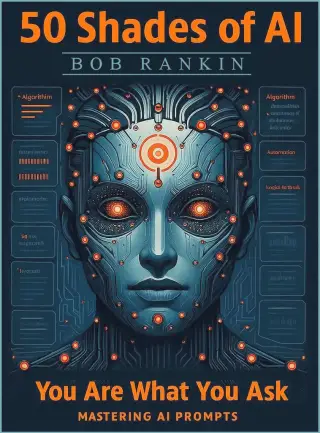
That’s where “50 Shades of AI” comes in!
My latest and greatest ebook will guide you, step-by-step, with plain-English instructions to take full advantage of the most poular AI tools. Whether you’re a parent, a teacher, a creator, a homeowner, or someone simply curious about tech’s next frontier, this ebook offers accessible guidance and inspiration.
No coding or tech skills are needed! By mastering the art of prompting, you’ll be ready to harness the full power of AI, making life easier, more organized, and far more interesting than ever before.
 Click here to learn more: 50 Shades of AI
If you have comments or questions, hit reply and I'll get back to you. See you again soon! -- Bob